











How to Choose the Right Classroom Furniture for Schools
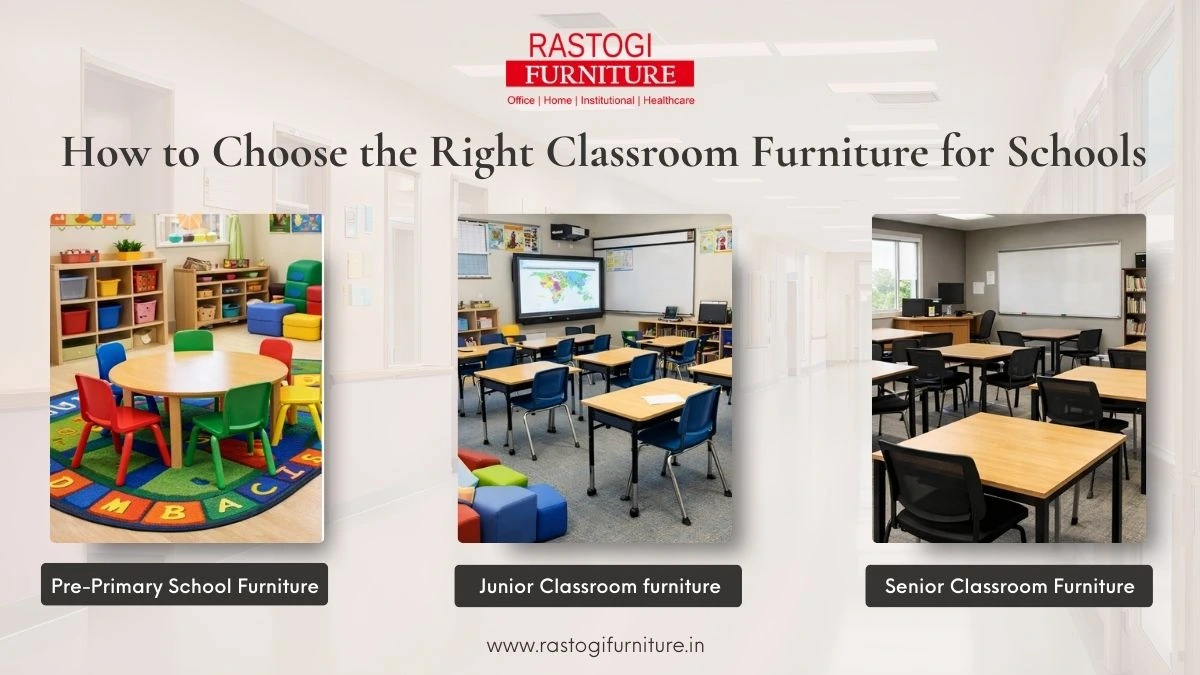
The process of designing the best learning environment is not determined solely by the form of teaching and learning activities but also by the environment in which students study. Classroom furniture is one of the most important elements of a learning environment. School furniture in Jaipur of high quality can have a tremendous impact on students' comfort, posture, concentration, and learning performance. At every level of education, there is a need for carefully designed furniture, from the colorful preschool classrooms to the well-organized senior classes. We shall see how to choose the best classroom furniture based on the learning level and criteria.
Choosing the Right Furniture for Every Stage: Pre-Primary, Junior & Senior Classrooms
Play Group (Pre-Primary) Classroom Furniture:
Pre-primary classes serve as the first cornerstone of learning, enabling the child to discover their active curiosity and artistic talent. Pre-primary school furniture enables students to learn, as their development needs demand various learning methods. Furniture must be lightweight, since children in that age bracket have not yet developed their motor skills. The system helps the teacher organize their classroom space to support various teaching activities, including storytelling, playtime, and group learning. Such a space is filled with colorful furniture to encourage children to learn actively. The other necessity is a safe environment. The design incorporates rounded edges and smooth surfaces, along with stable structures, to create a system that prevents people from getting hurt. Low-height storage units for toys and books help children learn to organize at a very young age.
Junior Classroom Furniture:
Students' learning styles become more organized as they advance to junior classes. Here is where the role of junior classroom furniture comes in, helping provide both comfort and discipline. At this level, students have more time to sit and concentrate on their studies. Consequently, ergonomic desks and chairs are needed. Furniture should be designed properly to support proper positioning, thus avoiding back pain or discomfort. Adjustable chairs are particularly handy at this time, as children are rapidly developing. The furniture used in junior classes should withstand daily wear and tear, as it is used for most of the day. Classroom seating is also organized to assist teachers in better managing the classroom and to provide a focused learning environment.
Senior Classroom Furniture:
The needs of senior students differ absolutely from those of younger learners. Their classrooms are more centered on productivity, concentration, and long study hours. This renders senior classroom furniture a vital component in fostering academic achievement. Senior classroom furniture should be stable and as durable as possible since it is used over a long duration. The desks should be large enough to fit books, notebooks, and, in some cases, laptops. The chairs should be comfortable, with appropriate back support, to make them comfortable during long lectures. Senior classrooms ought to be more minimal and free of distraction, unlike pre-primary or junior classes. Proper spacing between desks and clean layouts facilitates student concentration and ensures discipline.
Key Factors to Consider While Choosing Institutional Furniture
When choosing classroom furniture at any level, it is important to consider features that ensure comfort, safety, and durability. These are the main aspects that were clarified in a neat, point-wise manner below.
1. Ergonomics
The most important aspect of institutional furniture is ergonomics. The furniture should also support students' natural sitting posture, allowing them to sit comfortably without strain.
2. Durability
Durability is also very important, since school furniture is used daily and is an investment.The materials it employs are of high quality, such as hardwood, metal, or high-quality plastic, which may ensure the furniture lasts many years. Long-lasting furniture saves on maintenance costs and eliminates the need to replace it frequently.
3. Safety
Safety is a priority that should be given in all cases with young students. Furniture should be smooth, stable, and non-toxic to avoid injuries. Safe furniture provides students with a safe learning atmosphere where they are not endangered while moving about.
4. Flexibility
Classrooms in modern days need to be flexible to enable various teaching strategies. Furniture must be easily relocated, rearranged, or altered for activities such as group discussions, presentations, and personal learning. Moveable furniture will make the classes more vibrant and interactive.
5. Space Optimization
Space should be utilized efficiently in any classroom. Furniture that is well-made can also maximize the space that is there so that the classroom does not look too crowded. Space-saving plans also facilitate greater movement and improve the general learning atmosphere.
6. Trustworthy Manufacturer
To have quality and customization, it is a good decision to choose a trustworthy furniture manufacturer in Jaipur. Rastogi Furniture provides you the best furniture that is safe, durable, and customizable to meet the school's specific needs.
For a deeper understanding, explore our complete guide here: What Kind of Furniture Is Required in Educational Institutes?
Conclusion
One of the most significant actions in an efficient learning process is the choice of furniture in the classroom. It can be colorful, safe pre-primary school furniture, ergonomic junior classroom furniture, or long-lasting senior classroom furniture, and every phase needs to take it seriously. Quality institutional furniture not only makes the place comfortable but also improves learning.
Frequently Asked Questions (FAQs)
1. Why is classroom furniture important?
The importance of the classroom furniture is that it directly affects the comfort of students, their sitting position, and focus. Furnished well ensures a good learning process, less physical stress and better overall academic performance.
2. What materials are best for classroom furniture?
Classroom furniture should be made of wood, metal, and high-quality plastic. These materials are more robust and maintainable and can be used in the schools on a daily basis. The decision will be made according to the level of classroom use and needs.